Chip on a keyboard - strike 2
🇬🇧 ENGLISH
Chip on the keyboard — wide shot
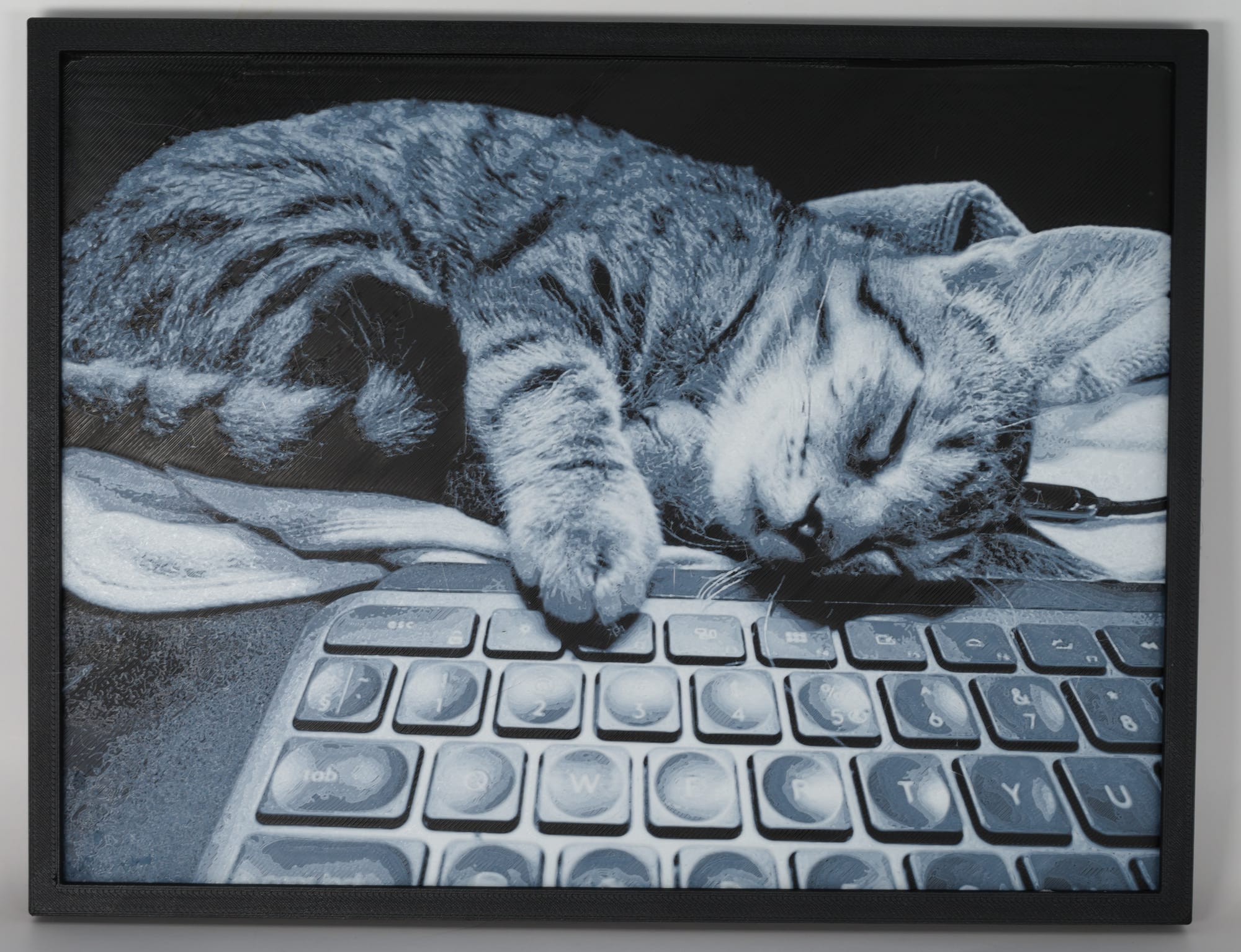
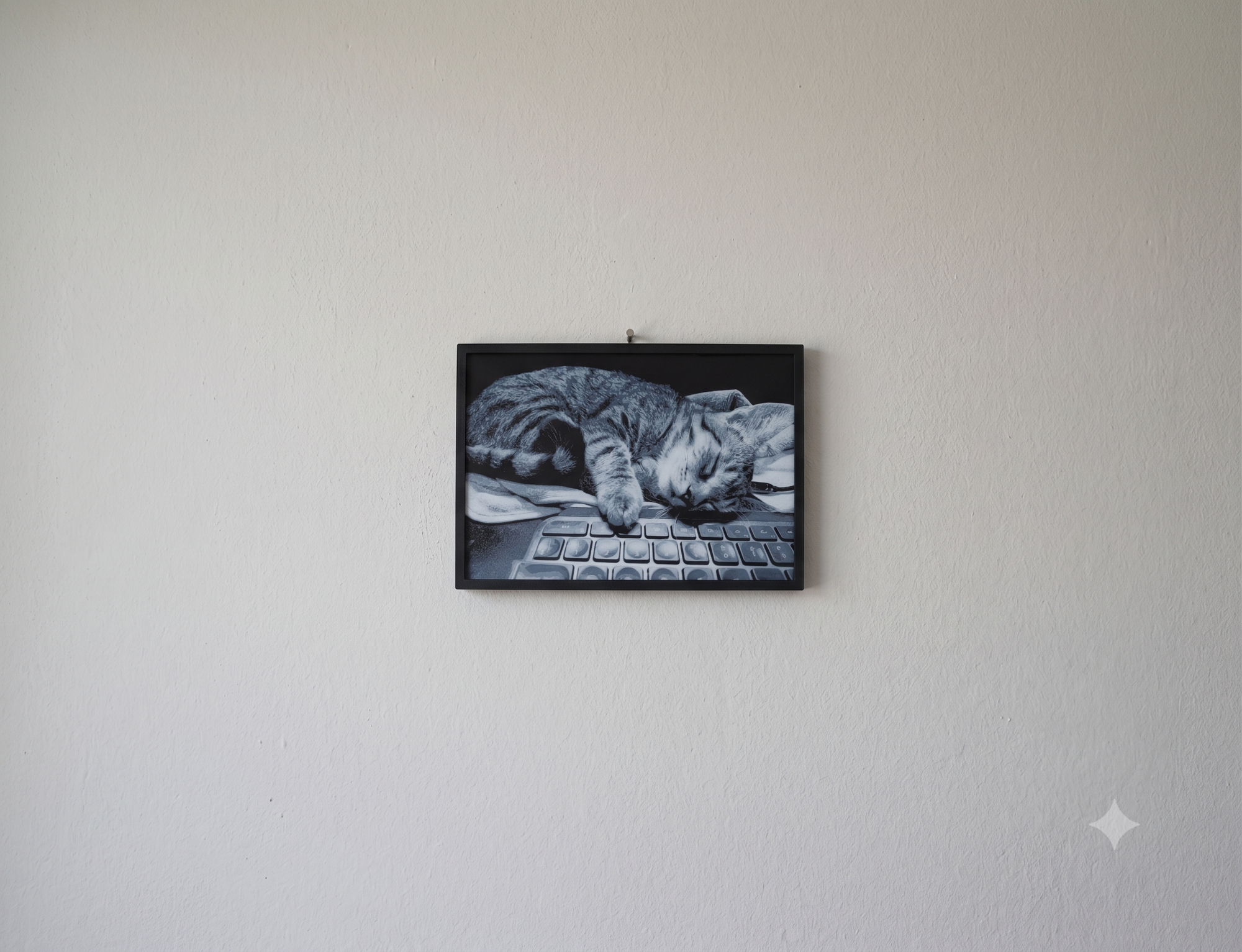
The first Chip print was a close-up: face, whiskers, blue-toned noir. This one steps back. You see the whole cat — the full sprawl, the keyboard underneath, the unmistakable posture of someone who has made a decision and is at peace with it.
Same subject, different frame, different mood. The close-up was a portrait. This is a document — the kind of photo that happens when you're in the middle of something and you look down and there's just a cat there, completely asleep, completely in the way.
Wide shots are actually harder for chroma than close-ups — less contrast, more tonal gradation, more room for the result to look flat. This one worked because the dark fur against the lighter keyboard gives the technique something to anchor to. The detail isn't in the whiskers this time; it's in the posture.
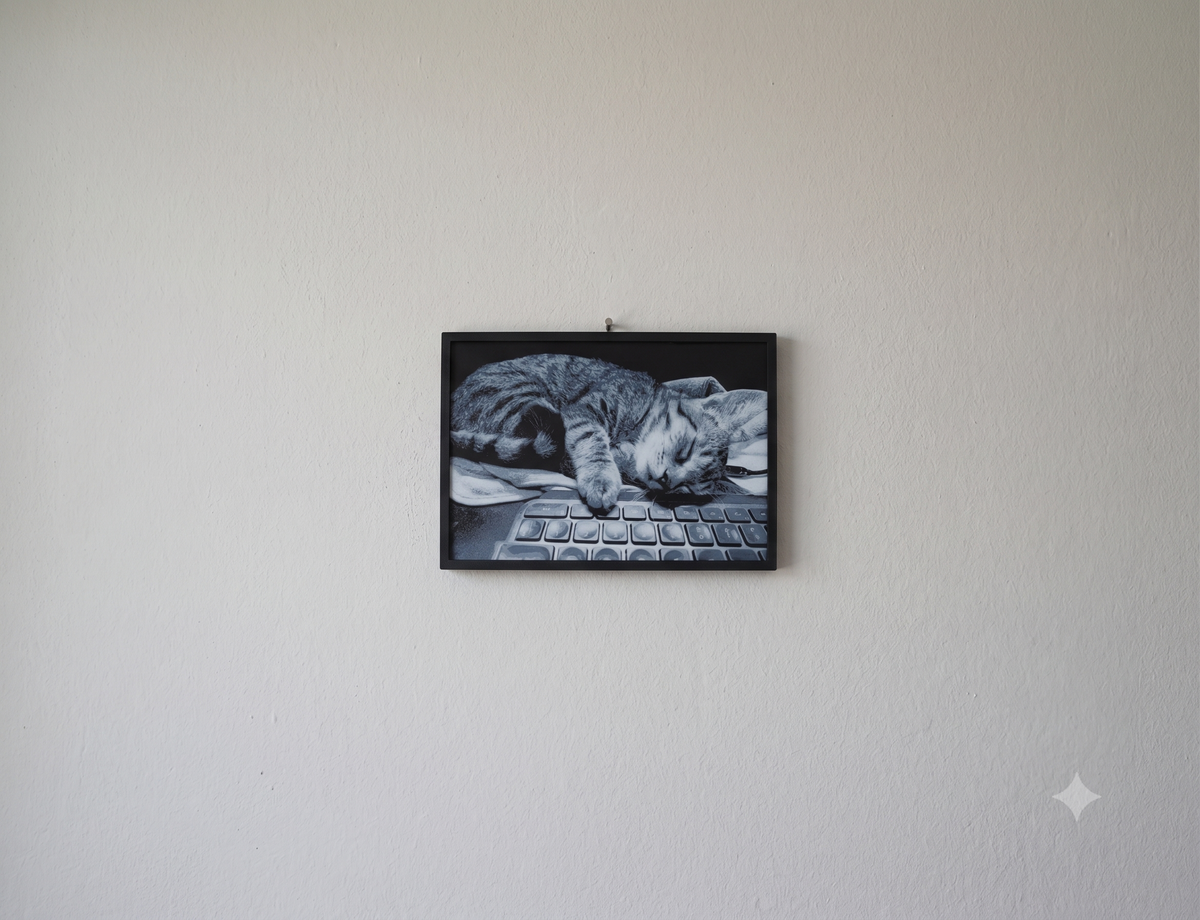
Both versions are in the shop. Together they make a diptych, which is a fancier way of saying Chip managed to get himself onto two separate walls.
---
🇵🇱 POLSKI
Chip na klawiaturze — ujęcie ogólne
Pierwsza wersja z Chipem była zbliżeniem: twarz, wąsy, niebieska, nokturnowa tonacja. Ta odsuwa się. Widać całego kota — pełne rozłożenie, klawiatura pod spodem, postawa kogoś, kto podjął decyzję i jest z nią absolutnie pogodzony.
Ten sam temat, inny kadr, inny klimat. Zbliżenie było portretem. To jest dokument — rodzaj zdjęcia, które powstaje w trakcie pracy, kiedy człowiek patrzy w dół i stwierdza, że tam po prostu leży kot, śpi i całkowicie blokuje dostęp.
Szerokie kadry są technicznie trudniejsze dla chroma niż zbliżenia — mniej kontrastu, więcej gradacji tonalnej, więcej miejsca na to, żeby wynik wyszedł płasko. To zadziałało, bo ciemna sierść na jaśniejszej klawiaturze daje technice punkt zaczepienia. Detal nie tkwi tym razem w wąsach — tkwi w postawie.
Obie wersje są w sklepie. Razem tworzą dyptyk, co jest eleganckim sposobem na powiedzenie, że Chip zdołał trafić na dwie oddzielne ściany.